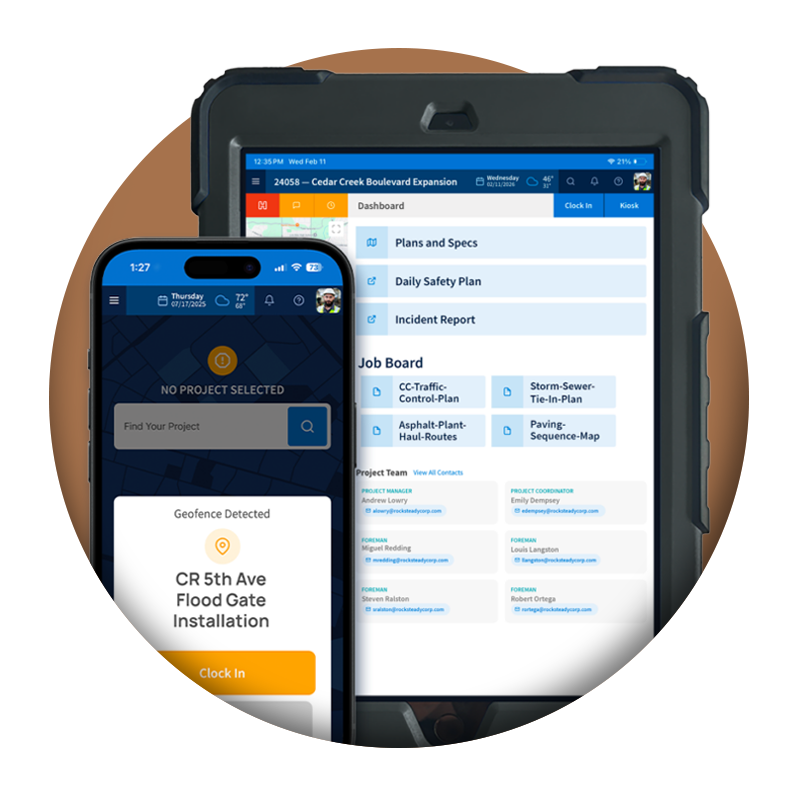
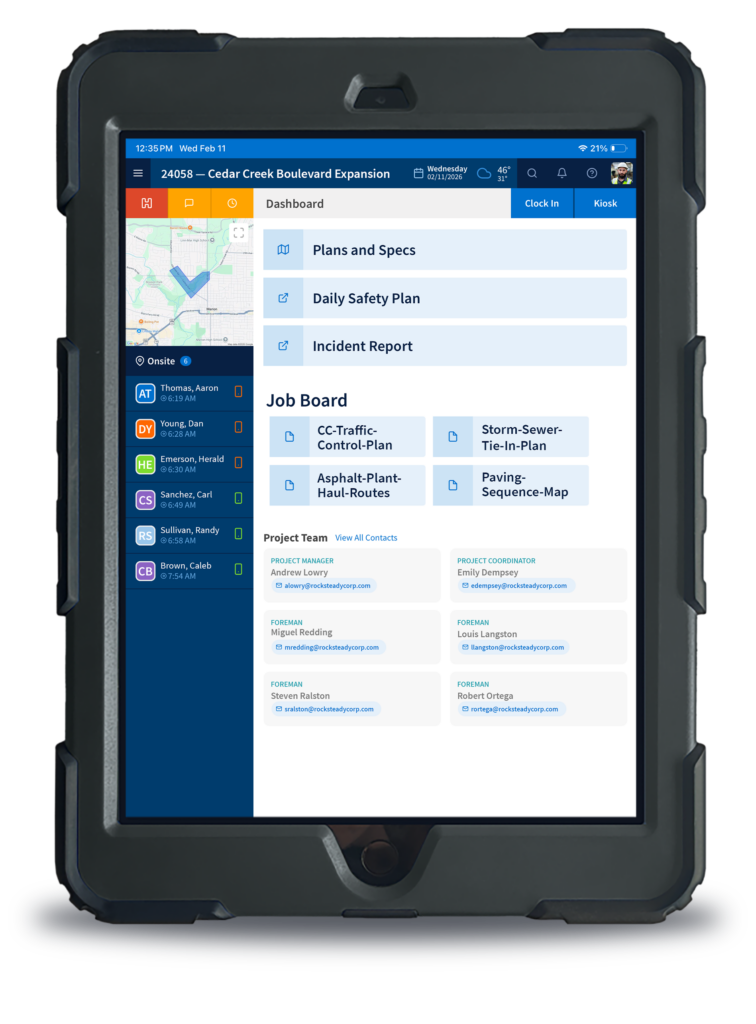
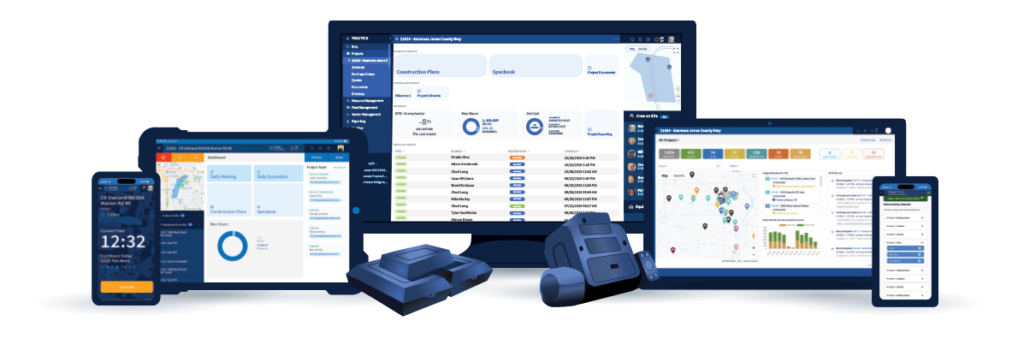
Coordinate equipment, trucking, drivers, and material deliveries from one centralized dispatch platform. Tractics helps heavy civil contractors keep projects moving by improving communication, increasing operational visibility, and supporting modern digital construction workflows.
Keep Equipment, Trucking & Material Deliveries Moving
Improve Coordination
Manage equipment, trucking, drivers, and daily dispatch activity from one centralized workflow.
See Project Activity More Clearly
Understand where equipment, trucks, and material deliveries are supporting work across active projects.
The Result: Better Operational Visibility
Help fleet, field, and office teams stay aligned around dispatch activity, deliveries, and project priorities.
BUILT FOR DISPATCH
One Dispatch Board for Every Truck and Jobsite
When dispatch runs on phone calls and whiteboards, crews end up waiting on trucks, equipment, and materials that should already be there. Explore how Tractics connects dispatchers, drivers, foremen, and the office around one shared view of what’s scheduled, what’s moving, and what’s arriving.
Keep Equipment, Trucks & Resources Moving Where They're Needed
Heavy civil projects depend on having the right equipment, trucks, materials, and crews in the right place at the right time.
Dispatchers coordinate equipment assignments, trucking schedules, and resource movement across multiple jobsites while project managers and foremen rely on accurate information to keep work progressing. Centralizing dispatch activity helps reduce unnecessary phone calls, improve communication, and keep projects moving efficiently.
The Result: Improve coordination across active jobsites while reducing delays.
Coordinate Material Deliveries with Greater Confidence
Dispatch doesn’t end when a truck leaves the yard.
Project teams need visibility into equipment movement, trucking schedules, and material deliveries throughout the day. Whether crews are waiting on aggregate, pipe, concrete, or support equipment, knowing when resources arrive helps everyone stay better coordinated.
As contractors continue adopting digital construction documentation—including electronic material records and e-Ticketing initiatives—connected dispatch information provides valuable operational context that supports more complete project documentation and better communication between fleet, field, and office teams.
The Result: Better visibility into equipment movement, deliveries, and daily project activity.
Support Better Project Planning
Dispatch information helps project teams understand equipment availability, trucking activity, resource utilization, and upcoming work across active projects.
With better operational visibility, project managers can make informed scheduling decisions, dispatchers can coordinate changing priorities more efficiently, and field teams spend less time waiting on equipment or deliveries.
The Result: Reduce surprises, improve scheduling, and keep projects moving.
Keep Fleet, Field & Office Teams Aligned
Successful projects depend on communication.
When dispatch information is centralized, dispatchers, drivers, mechanics, field supervisors, project managers, and office teams all work from the same operational information.
Equipment assignments, trucking activity, material deliveries, and project updates become easier to coordinate, helping contractors improve communication while supporting stronger digital construction documentation throughout the project lifecycle.
The Result: Improve communication across every stage of the project.
Understand Equipment Productivity
Equipment productivity reporting helps contractors understand how equipment is being utilized across active projects.
By reviewing equipment activity alongside dispatch information, operations teams can identify utilization trends, improve scheduling decisions, and better understand how fleet resources are supporting project performance.
The Result: Make more informed decisions about equipment utilization and operational planning.
HEAVY CIVIL BY DESIGN
Built for the Pace of Heavy Civil Work
On a road, utility, or earthwork job, one late truck can stall an entire crew. A paving spread waiting on asphalt or a pipe crew waiting on bedding stone burns labor hours every minute nothing shows up.
Tractics gives dispatchers and foremen the same view of equipment assignments, trucking schedules, and material deliveries, so priorities can shift during the day without a string of calls to sort it out.
The Result: Less idle time on the jobsite and tighter coordination between dispatch and the field.
Construction Fleet Dispatch Software
Frequently Asked Questions
What is construction fleet dispatch software?
Construction fleet dispatch software helps contractors coordinate equipment, trucking, drivers, and material deliveries across active projects while improving communication between fleet, field, and office teams.
Who uses fleet dispatch software?
Fleet managers, dispatchers, project managers, operations leaders, foremen, and field supervisors use dispatch workflows to coordinate equipment, trucking activity, deliveries, and project resources.
How does fleet dispatch improve project operations?
Centralized dispatch provides better visibility into equipment availability, trucking schedules, material deliveries, and resource utilization. This helps contractors improve coordination, reduce delays, and keep projects moving efficiently.
Can drivers log equipment issues?
Yes. Drivers can log equipment issues directly in Tractics so fleet and maintenance teams have clearer documentation.
Can Tractics support digital material delivery workflows and e-Ticketing initiatives?
Yes. Tracticshelps contractors coordinate dispatch activities, monitor equipment movement, and maintain visibility into fleet and project operations. As organizations adopt digital construction documentation and e-Ticketing initiatives, Tractics provides the operational context that connects dispatch activity with field documentation, project records, and office reporting to create a more complete picture of project activity.
Why is connected dispatch important for heavy civil contractors?
Heavy civil projects depend on precise coordination between equipment, trucking, material deliveries, and field crews. Connected dispatch helps reduce delays, improve communication, and provide greater visibility into the resources that keep projects moving.
Ready for more?
See How Tractics Connects Your Fleet Operations
Give your crews the tools they need to work more efficiently while giving your office the visibility needed to make better project decisions. Explore how Tractics helps heavy civil contractors connect labor, documentation, and communication from the field to the office.
Submit your information below and we’ll respond soon. All fields required.
We Value your Privacy
We use cookies to enhance your browsing experience, serve personalized ads or content, and analyze our traffic. By clicking “Accept All”, you consent to our use of cookies. See our Privacy Policy.